
In modern retail environments, consumer rights protection authorities are the frontline defense protecting citizens from deceptive commercial practices, adulterated foodstuffs, toxic cosmetics, and substandard pharmaceutical products.
In emerging economies such as Bangladesh, agencies like the Directorate of National Consumer Rights Protection (DNCRP), the Bangladesh Standards and Testing Institution (BSTI), and law enforcement task forces conduct continuous market surveillance operations. Similarly, in international jurisdictions, organizations such as the US Federal Trade Commission (FTC), European Consumer Protection Cooperation (CPC) Network, and OECD task forces work tirelessly to protect public welfare and fair market competition.
However, during market raids and commercial store inspections, surveillance officers face acute operational bottlenecks:
- Visual Indistinguishability: Modern counterfeit packaging so closely imitates authentic trademark colors, registered logos, and embossed barcodes that inspectors cannot conclusively determine authenticity through visual observation alone.
- Laboratory Latency: Sending seized inventory to forensic or chemical testing laboratories takes days or weeks, delaying administrative action and allowing illicit syndicates to disperse inventory.
- Chain of Custody & Evidentiary Challenges: In consumer courts and mobile tribunals, prosecuting counterfeit distributors requires tamper-evident, scientifically defensible evidence of fraudulent product identity that stands up to adversarial legal scrutiny.
To overcome these hurdles, consumer rights agencies require lightweight, mobile-first verification tools that give quick, documented identity checks in retail aisles.
How N3CODE Could Support Field Inspection
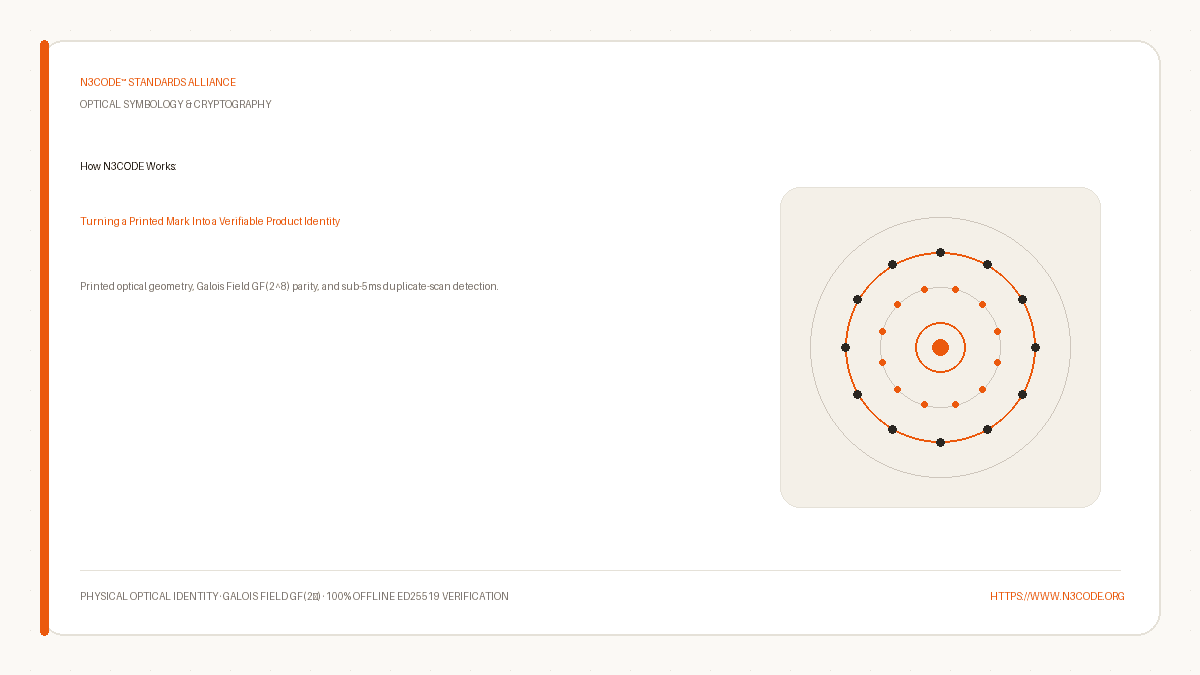
Engineered by NLAN Ltd., N3CODE offers an auditor app that turns an authorised smartphone into a product identity checker. It checks the identity of the mark; it does not test what is inside the package:
[RETAIL SHELF INSPECTION] ──> [DNCRP / REGULATORY AUDITOR APP]
                                             │
[INSPECTION RECORD]      <── [ON-DEVICE TAG CHECK + LOCATION + TIME]
1. On-Device Cryptographic Tag Check
Market surveillance frequently takes place in dense wholesale bazaars, underground storage godowns, and rural border districts where cellular data networks are congested or unavailable. The N3CODE verifier checks the identity tag on the device with a provisioned key, so it works without a network; duplicate-scan checks run when the device is back online.
2. Inspection Records
When an inspector scans a suspicious carton or bottle, the app records:
- High-Precision Scan Timestamp: Coordinated Universal Time (UTC) timestamp recorded at point of inspection.
- Geotagged GPS Coordinates: Latitudinal and longitudinal coordinates recording the exact physical market location.
- Product Identity: brand ID, SKU index, serial number and the result of the tag check.
- Use as Evidence: the records can support an investigation; whether they are accepted in a court or tribunal depends on local rules and procedure.
3. Online Duplicate-Scan Monitoring
When the inspector's phone is online, scans sync with N3CODE's duplicate-scan analysis. If an identical serial number is detected in multiple retail shops in Chittagong, Sylhet, and Dhaka within a short time interval—representing physically impossible velocity (>900 km/h)—the system flags the serial as a possible copy. The brand can then investigate which units are genuine. Learn more about cryptographic clone detection.
4. Cross-Border Importer Manifest Verification
For imported consumer goods (such as foreign milk powders, cosmetics, and electrical electronics), brands and importers can apply an N3CODE over-sticker so inspectors can check that the unit carries an identity the importer registered. A missing or invalid mark is a reason to investigate further, not proof on its own.
A Possible Inspection Workflow
If an authority and a brand agree to use N3CODE in inspections, a workflow could look like this:
- Equip Enforcement Officers: Provide inspectors with the N3CODE Auditor app provisioned with the brand's verification keys.
- Shelf Sampling: Randomly scan product units across grocery shelves, cosmetics counters, and pharmacy storage bins.
- Instant Visual Result:
- Identity verified: the tag is valid and the serial is registered.
- Possible duplicate: the tag is valid, but the serial was scanned in suspicious places (a possible copy to investigate).
- Not recognised: the tag is invalid or the serial is unknown (a reason for further checks under the authority's own procedures).
- Document: export the scan records to attach to the inspection report.
Safeguarding Consumer Trust and Economic Sovereignty
Consumer rights protection is essential to public health, honest industrial enterprise, and economic stability. Mobile identity checks can give inspectors faster, documented signals about suspicious products. N3CODE checks the identity of a package, not its contents, and any use by an authority must be formally agreed.